
Overview
Marriage in Igbo culture is not just a union between two individuals—it is a binding agreement between families, lineages, and communities. Known traditionally as Igbankwụ Nwanyi (wine carrying ceremony), this process is deeply symbolic, layered, and communal.
It represents:
- Unity between families
- Continuity of lineage
- Social legitimacy of the union
- Spiritual blessings from ancestors
Historical & Cultural Significance
Marriage traditions have been passed down for generations as a way to:
- Preserve family structure and heritage
- Ensure compatibility and background transparency
- Strengthen community ties
- Maintain moral and cultural order
In traditional settings, marriage is not rushed—it is a process, often involving multiple stages before the final celebration.
Key Stages of Traditional Marriage
1. Introduction (Iku Aka / Knock on the Door)
The groom’s family formally visits the bride’s family to declare intentions.
Key elements:
- Presentation of kola nuts
- Formal request for the bride’s hand
- Initial acceptance by the bride’s family
This stage establishes respect, transparency, and intent.
2. Background Investigation (Iju Ese)
Families discreetly investigate each other to ensure:
- No hidden taboos
- Good moral standing
- No forbidden lineage conflicts
- Any history of specific illnesses, or health issues
This step reinforces trust and long-term stability.
3. Bride Price Negotiation (Ime Ego)

A list of required items is presented to the groom’s family.
Typically includes:
- Palm wine
- Yams
- Clothing
- Monetary gifts
- Livestock (in some regions)
Contrary to misconceptions, this is symbolic appreciation, not a purchase.
4. Wine Carrying Ceremony (Igbankwụ)
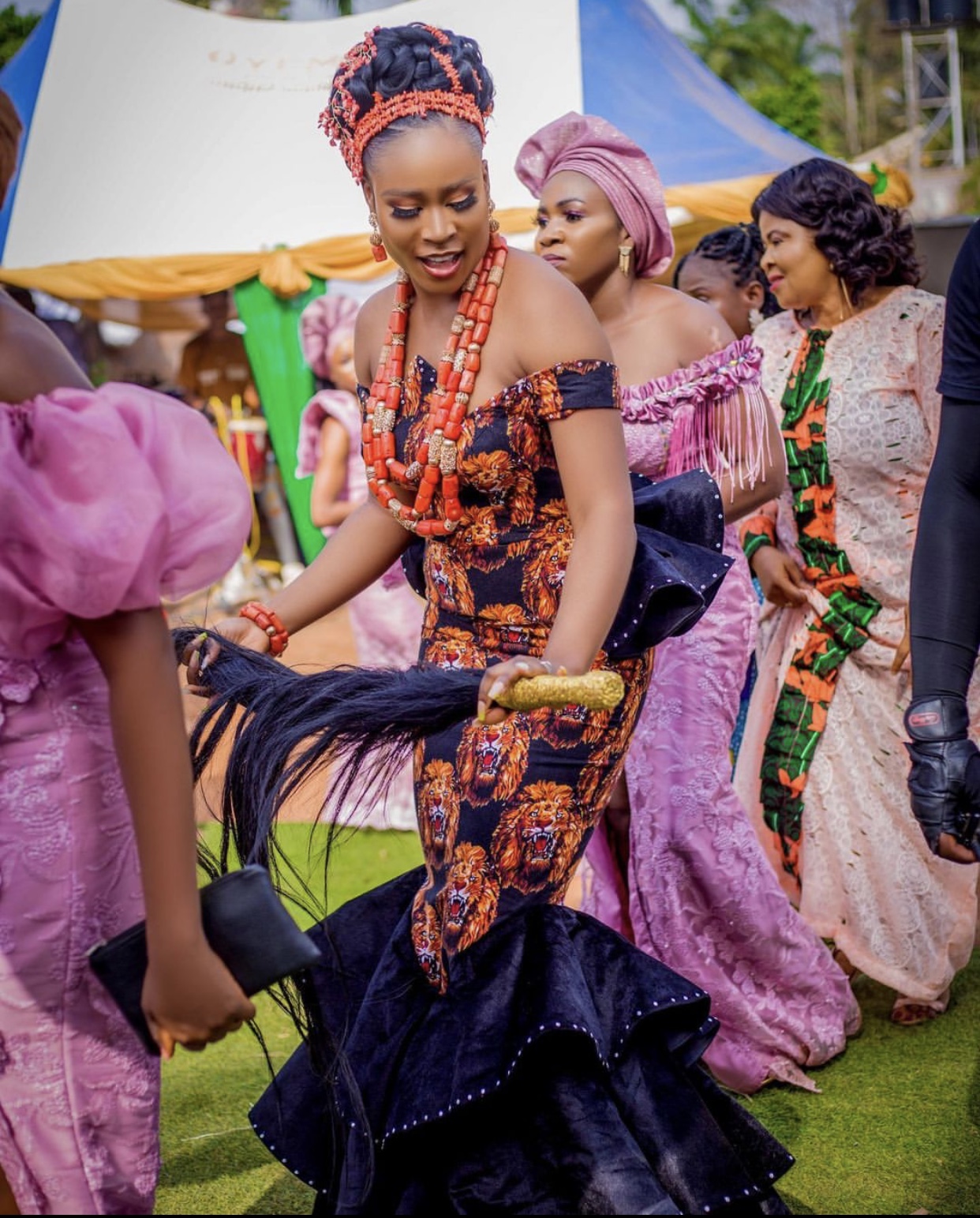
This is the highlight of the traditional marriage.
What happens:
- The bride searches for her groom in the crowd
- She kneels and offers him palm wine
- He drinks, confirming acceptance
- He places money in the cup (symbolic commitment)
This moment publicly declares:
“This is my husband.”
5. Blessings & Celebration
- Elders pray over the couple
- Kola nut is broken
- Food, music, and dancing follow
Marriage becomes official in the eyes of tradition and community.
Traditional Attire & Symbolism
Bride:
- George wrapper or lace
- Coral beads (wealth & royalty)
- Head tie (gele)
- Body art (uli in some regions)
Groom:
- Isi Agu top
- Red (or black) cap (symbol of authority)
- Staff or walking stick or Akupe
Clothing reflects status, identity, and cultural pride.
Cultural Values Embedded in Marriage Traditions
- Respect for elders → decisions involve family heads
- Community over individualism → marriage affects many
- Ritual & symbolism → nothing is random
- Honor & dignity → processes must be followed properly
Modern Adaptations
Today, many Igbo marriages combine:
- Traditional rites (Igbankwụ)
- Church weddings
- Civil ceremonies
However, the traditional aspect remains the cultural foundation.
Why This Tradition Matters Today
In a rapidly urbanizing world, these traditions:
- Preserve identity across generations
- Teach values of patience and commitment
- Provide structure to relationships
- Connect the diaspora back to their roots
How to Perform (Simplified Guide for Diaspora)
- Inform both families early
- Conduct a formal introduction
- Obtain the bride price list
- Prepare items respectfully
- Organize the wine carrying ceremony
- Include elders for blessings
Marriage in Igbo culture is not just an event—it is a journey of unity, respect, and continuity.
It reminds us that love is not only felt—it is recognized, affirmed, and celebrated by community.