Overview

The Masquerade tradition, known as Mmanwu in the Igbo language, is one of the most powerful and sacred cultural institutions in Igbo society.
Mmanwu represents the manifestation of ancestral spirits returning to the community. Through masked performances, ritual dances, and symbolic costumes, the masquerade serves as a bridge between the living, the ancestors, and the spiritual world.
In traditional belief, a masquerade is not merely a performer in costume. Once fully dressed and masked, the individual is transformed into a spirit-being, embodying ancestral authority, wisdom, and supernatural presence.
Masquerades appear during important cultural events including:
- Community festivals
- New Yam celebrations
- Funerals of respected elders
- Initiation rites
- Village cleansing ceremonies
- Title-taking ceremonies
They entertain, educate, enforce social norms, and preserve Igbo identity across generations.
Origins and Cultural Significance
The Mmanwu institution dates back centuries and is deeply rooted in Igbo cosmology and ancestral reverence.
Traditional Igbo society believes that ancestors (ndichie) continue to guide and watch over the living. Masquerades symbolize these ancestors temporarily returning to interact with the community.
Because of this spiritual role:
- The identity of the masquerade performer is kept secret.
- Only initiated men traditionally participate in masquerade societies.
- The masquerade commands respect and authority during public appearances.
Masquerades historically served important governance and judicial roles in village life. They could:
- Enforce community laws
- Resolve disputes
- Discipline offenders
- Announce important messages from elders
In many communities, masquerade societies functioned almost like traditional security or moral enforcement systems.
Types of Igbo Masquerades
Festival Masquerades

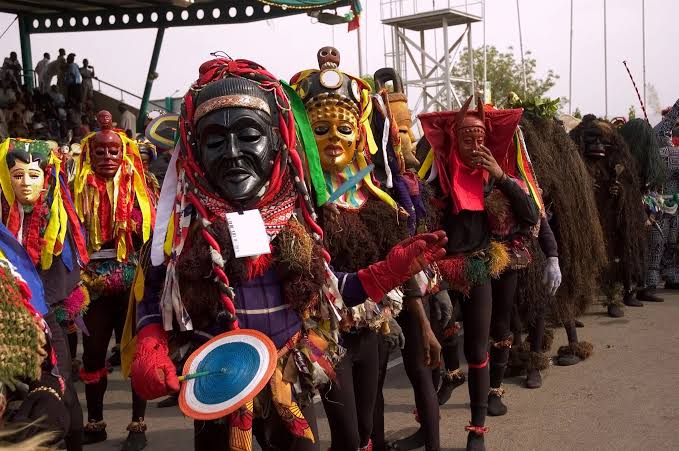
Festival masquerades are designed primarily for public celebration and entertainment. They appear during large gatherings such as cultural festivals and New Yam celebrations.
These masquerades often feature:
- Brightly colored fabrics
- Intricate embroidery
- Elaborate masks
- Large layered costumes
Their performances include dance, acrobatics, drumming, and dramatic storytelling.
Spirit Masquerades

Spirit masquerades represent ancestral or supernatural beings. Their appearance is often mysterious and solemn.
Characteristics may include:
- Dark or raffia-covered costumes
- Animal skins
- Symbolic staffs or ritual objects
- Slow, deliberate movement
These masquerades may perform ritual dances or spiritual cleansing ceremonies.
Some communities believe certain masquerades possess spiritual powers, making them both respected and feared.
Warrior Masquerades
Warrior masquerades symbolize strength, protection, and the historic warrior traditions of the Igbo people.
They often appear during:
- Title ceremonies
- Community celebrations
- Cultural reenactments
Their performances may include:
- Aggressive dance movements
- Chasing spectators playfully
- Mock combat displays
These masquerades reinforce ideas of bravery, honor, and community defense.
Elements of a Masquerade Performance
A full masquerade appearance involves several coordinated elements.
Costume and Mask
Masquerade costumes are crafted from materials such as:
- Raffia
- Animal skins
- Wood carvings
- Cloth and embroidery
- Beads and shells
Masks often represent spirits, animals, ancestors, or symbolic figures.
Music and Drumming
Drums play a crucial role in masquerade performances. Rhythms guide the masquerade’s movement and signal transitions during the performance.
Traditional instruments include:
- Igba (drums)
- Ogene (metal gong)
- Oja (flute)
Attendants
Masquerades are usually accompanied by assistants who:
- Clear paths through the crowd
- Control spectators
- Carry ritual objects
- Communicate with musicians
Role in Community Life
Masquerades serve multiple social functions in Igbo society.
Cultural Education – Masquerade performances pass down history, moral lessons, and traditions.
Social Regulation – In the past, masquerades helped enforce community rules and punish wrongdoing.
Entertainment – Festivals featuring masquerades bring entire communities together for celebration.
Spiritual Connection – Most importantly, masquerades maintain the connection between the living and ancestral spirits.
Masquerade Festivals in Igboland
Major masquerade festivals occur throughout Igbo communities, especially during:
- New Yam Festival (Iri Ji)
- Dry season festivals or Mmanwu festivals
- Community anniversary celebrations
- Burial ceremonies for titled men
During these festivals, multiple masquerade groups perform, each representing a different lineage, village, or masquerade society.
Crowds gather in village squares to watch elaborate performances filled with music, dance, and ritual symbolism.
Cultural Preservation
Today, masquerade traditions remain vibrant across southeastern Nigeria, especially in states such as:
- Anambra
- Enugu
- Imo
- Abia
- Ebonyi
However, modernization and urban migration have reduced the frequency of traditional ceremonies in some areas.
Cultural festivals, heritage events, and diaspora initiatives are now playing an important role in preserving the Mmanwu tradition for future generations.
Platforms like Njiko, dedicated to documenting traditions and rituals, help ensure that these cultural practices continue to be understood and respected by younger generations.